The Untold 13-Year Journey Behind Kevin Hart’s So-Called “Overnight Success”
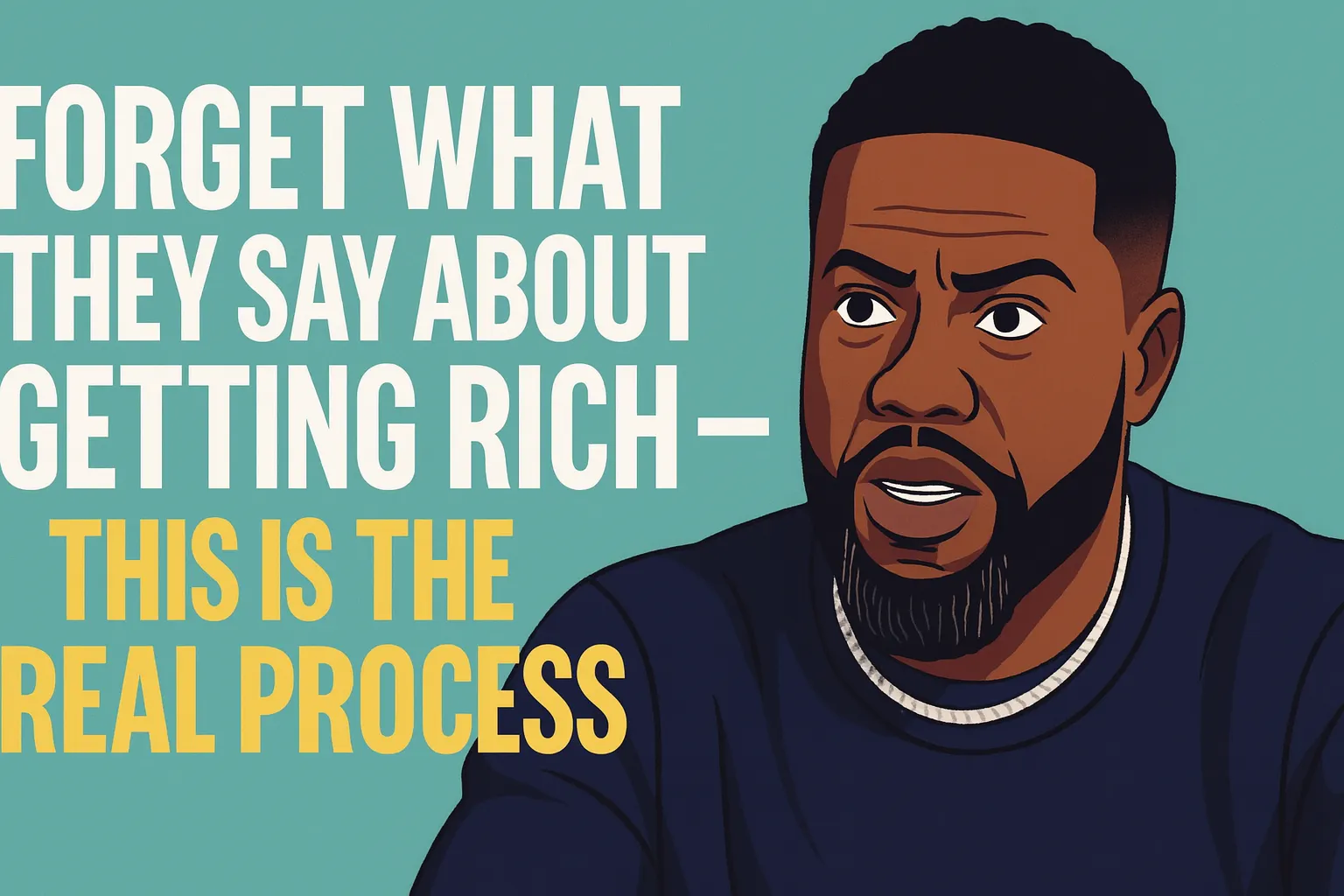
Summary
•
Success takes far longer than people admit—Kevin Hart spent 13 years failing in obscurity.
•
Most people quit early; commitment and completion are the true differentiators.
•
His brutal weekly routine (25–28 sets every weekend) reveals the real cost of “becoming rich.”
•
Childhood hardship, strict discipline, and accountability shaped his discipline and ambition.
•
Wealth ultimately came from ownership, business building, and being willing to ask stupid questions.
This post is a detailed summary and interpretation of the interview “Kevin Hart: They’re Lying to You About How to Become a Millionaire!” from The Diary of a CEO. It explores the real timeline behind Kevin Hart’s success, the failures he endured, the moment his career exploded, and the business mindset he built afterward. Every insight here comes directly from Hart’s own explanations, experiences, and reflections throughout the conversation.
Who Is Kevin Hart — And Why His Story Deserves Your Attention
Before Kevin Hart became a global comedy icon, he was just a kid from North Philadelphia sleeping in a hallway, sharing bunk beds with his brother, and growing up in an environment where crime, addiction, and absent fathers were the norm—not the exception.
But what sets him apart isn’t his fame.
It’s the architecture of his mindset:
•
A strict mother who refused to let him quit anything
•
A father who, through his failures, taught him accountability
•
A childhood where “normal” meant learning to survive
•
A genuine obsession with finishing what he starts
Hart didn’t rise because he was lucky.
He rose because life forced him into a level of discipline most people will never experience.
 The Real Process of Becoming Successful
Hart’s story isn’t motivational fluff.
It’s gritty.
It’s unglamorous.
And it exposes how success actually works.
1. Success Is Slow — The 13-Year Grind Nobody Talks About
Kevin Hart didn’t “break out.”
He wore down the universe until it finally cracked open for him.
He describes the early years like this:
“Nobody believed I was funny. Not comedian funny.”
Instead of quitting, he built a life around the grind:
•
Driving daily from Philadelphia to New York•
Coming home at 4am•
Doing 25–28 comedy sets every weekend•
Performing for $20–$25 per set•
Standing alone while others rolled their eyesThis wasn’t a few months.
Not three years.
Thirteen years.A full decade plus three more years of people doubting him, ignoring him, and telling him to “be realistic.”
Most people would have quit.
Hart didn’t—because quitting wasn’t an option in his household:
“If you start something, you finish it.”
This one principle became the foundation of everything he built later.
Suggested Image #1
A long uphill road with silhouettes dropping off the path while one continues alone → Represents the 13-year grind.
2. The Moment Everything Changed — And Why It Took 13 Years to Arrive
Every legendary career has a “moment.”
For Kevin Hart, it was Shaq’s All-Star Comedy Jam.
He stepped onstage prepared not because he was confident,
but because he had repeated failure so many times that he knew how to deliver no matter what.
What happened?
•
The crowd exploded
•
The special went viral
•
Celebrities took notice
•
His next comedy special (“Seriously Funny”) blew up
•
Arena tours suddenly became possible
It looked like an overnight success.
But the truth?
That one moment was the reward for 13 years of invisible work.
This is the part of success people never see—and rarely want to hear.
Suggested Image #2
A spotlight on an empty stage with a single microphone → Symbolizes the “one moment.”
3. Why Most People Will Never Make It (Hart’s Brutal Truth)
Hart says people believe a lie:
that success is supposed to come fast.
But he explains bluntly:
“People quit at year two. Sometimes year three.
They never finish anything.”
He’s watched countless young entrepreneurs say:
•
“I’m doing 17 different things!”
•
“I’m trying all these ideas!”
•
“I’m hustling!”
But the person doing 17 things usually completes none.
Hart’s rule:
•
Pick your thing•
Focus•
Work through the boring years•
FinishThis principle alone put him ahead of everyone who jumped ship the moment things got difficult.
4. Money Isn’t in Fame — It’s in Ownership
Kevin Hart eventually realized something powerful:
Being famous makes you money,
but ownership builds wealth.
Once the comedy started working, he shifted into:
•
Venture capital
•
Brand partnerships
•
Equity deals
•
Production companies
•
Long-term revenue ecosystems
But here’s the twist—he entered these rooms with no knowledge and full insecurity.
He openly admits:
“I thought everything was a scam.”
So how did he navigate it?
He forced himself to ask stupid questions.
•
“How does investing actually work?”
•
“What do you mean 20x returns?”
•
“Who’s behind this curtain?”
Most people stay quiet because they’re afraid of looking dumb.
Hart weaponized his ignorance and turned it into mentorship, access, and eventually—wealth.
Suggested Image #3
A hand pulling back a curtain, revealing gears or a financial ecosystem → Represents learning the business behind the scenes.
5. The Hidden Cost of Success — Time, Stress, and Internal Pressure
Hart does not glamorize success.
His description of the emotional cost is raw and honest.
He says:
•
He is stressed every day
•
He carries the weight of employees, partners, and family
•
He often reaches a breaking point in the day
•
He shuts off completely when he’s drained
•
He fears the star could dim someday
But he keeps going because he refuses to waste the “window of strength” he has:
“If I have the mind, the health, the momentum—
I’m not wasting it.”
This isn’t hustle-culture motivation.
It’s survival instinct elevated into discipline.
6. On Being a Man Today — Leadership, Accountability, and Emotion
Hart says masculinity today is “foggy,” and the world argues endlessly about what a “man” should be.
But for him, it’s simple:
A good man is someone who:
•
Takes responsibility
•
Leads with clarity
•
Communicates honestly
•
Shows emotion without being ruled by it
•
Builds a path his kids can walk further than he did
His father’s failures became his blueprint for doing better.
And that honesty—not perfection—is what he wants to pass to his children.
“My job is to give them opportunities
I never had—even if they will never know the weight of what I carry.”
Final Takeaway
Kevin Hart’s career exposes a truth most people avoid:
Success is not magic—it’s endurance.
Wealth is not fame—it’s ownership.
Breakthrough is not luck—it’s preparation meeting the moment.
If you want to “get rich,” here’s the real formula:
•
Finish what you start
•
Endure the years nobody sees
•
Ask questions that make you look stupid
•
Build ownership instead of chasing attention
•
Stay ready for your moment
Because when it finally comes,
it will feel like it arrived in an instant—
but you’ll know it took a lifetime to earn.