How a Harvard neuroscientist discovered that consciousness, identity, and even your emotions are brain-made illusions—and how to take control.
 Summary (read first)
•
Reality is filtered. You don’t see life “as it is” but as your brain edits it.•
A scientist’s stroke proved it. Losing her left hemisphere, Dr. Jill felt peace and selfless awareness.•
You have four brain characters. Each drives different thoughts, feelings, and behaviors.•
Emotions ≈ 90 seconds. After that, thinking keeps the loop alive.•
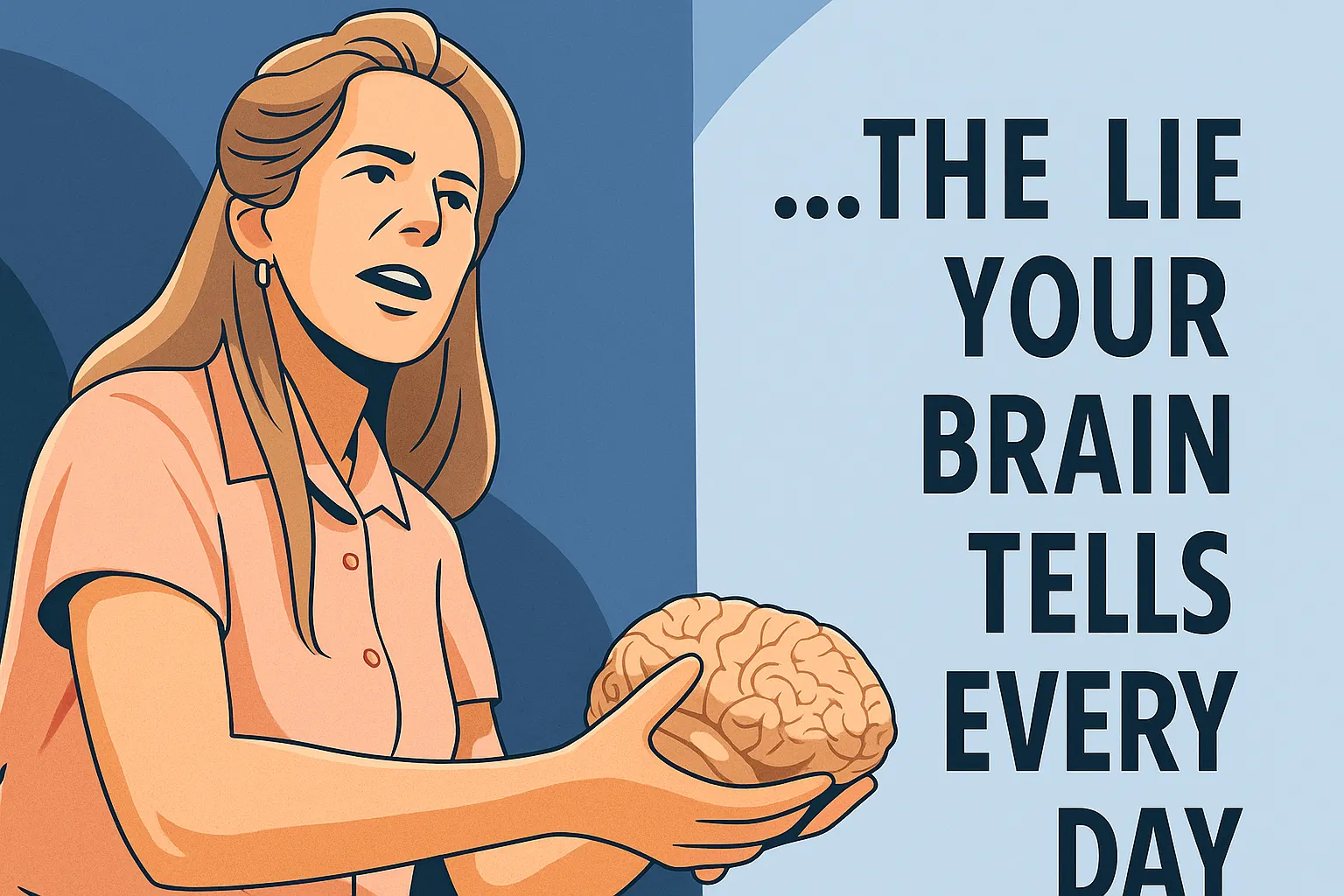
Whole-brain living = balance. Learn to choose which character holds the mic.This post is a detailed summary of the video “No.1 Brain Scientist: Your Brain Is Lying To You! Here’s How I Discovered The Truth!” from The Diary of a CEO with Dr. Jill Bolte Taylor. It explores how the brain constructs our version of reality, how a left-hemisphere stroke revealed a radically different state of consciousness, and how understanding four brain “characters” helps us steer emotions and behavior. All scientific insights and practices here are attributed to Dr. Taylor’s explanations and lived recovery.
Who is Dr. Jill Bolte Taylor—and why trust her?
•
Harvard-trained neuroscientist and bestselling author of My Stroke of Insight and Whole Brain Living.
•
Suffered a massive left-hemisphere hemorrhage at 37: lost language, numbers, identity; spent eight years rebuilding.
•
Brings a rare dual lens: rigorous cellular neuroanatomy and first-person experience of self dissolving into present-moment awareness.
•
“I’m glad I had the stroke—it set me free.” ← That’s not sensationalism; it’s a scientist reporting what she observed from the inside. The Brain’s Biggest Lie: The voice in your head is the whole of you
“You are not your thoughts. You are the life that thinks them.”
Your brain is constantly editing, labeling, and compressing reality to keep you efficient and safe. That editing creates a convincing story—a narrator that:
•
Picks what to notice (and what to ignore),
•
Judges good/bad, safe/dangerous,
•
Explains events to protect your ego (even when it’s wrong).
This is incredibly useful… until the editor becomes a gatekeeper, narrowing your world to anxiety, comparison, and control. Dr. Jill calls this the left-brain loop—and most modern lives are trapped inside it.
The Day the Left Brain Went Dark
“Numbers didn’t exist. Even 911 was just squiggles.”
•
A sudden, drilling pain behind her left eye.
•
Right arm paralyzed; speech collapsed into animal-like sounds.
•
Language, identity, planning, the sense of “me” → offline.
And yet, as the analytical narrator faded, something startling appeared:
•
Vast, quiet awareness of the present.
•
No past/future. No harsh judgment. Only connection, awe, and relief.
•
“Without my left brain, I felt unlimited and safe.”
This wasn’t mysticism—it was neuroanatomy revealing parallel modes of consciousness.
Meet Your Four Brain Characters (and why you need each one)
Think of your brain as two hemispheres × two networks (thinking/emotional) → four characters.
Use them like a toolbelt, not a tug-of-war.
•
Character 1 — Left Thinking (The Operator)Organized, efficient, decisive. Loves calendars, metrics, checklists.
◦
Superpower: Ships things.
◦
Watch-out: Can become controlling and joyless.
•
Character 2 — Left Emotional (The Protector)Vigilant, reactive, past-anchored. Stores pain, grudges, “what hurt me.”
◦
Superpower: Detects risk and preserves boundaries.
◦
Watch-out: Anxiety, resentment, addiction cravings can live here.
•
Character 3 — Right Emotional (The Explorer)Playful, sensory, in-the-body. Think music, movement, nature, flow.
◦
Superpower: Joy, creativity, improvisation, bonding.
◦
Watch-out: Impulsive; ignores consequences.
•
Character 4 — Right Thinking (The Sage)Spacious, present, compassionate. Sees the big picture and our shared humanity.
◦
Superpower: Peace, meaning, gratitude, perspective.
◦
Watch-out: Can drift if never grounded by Character 1.
Designers’ shortcut metaphor:
•
1 = Project Manager, 2 = QA & Risk, 3 = Art Director, 4 = Creative Director/Why.
High-performing teams (and humans) rotate leadership based on context.
The 90-Second Emotion Rule (your reset button)
“Emotions are biochemical waves—about 90 seconds long.”
•
A trigger thought sparks a physiological surge (heart rate, hormones, posture).
•
If you don’t re-think the trigger, the wave finishes in ≈ 90 seconds.
•
If you ruminate, you re-ignite the loop—again and again.
How to use it (micro-protocol):
1.
Name it (anger, fear, shame).
2.
Feel it fully—breath low and slow; don’t narrate.
3.
At ~90 seconds, choose your next character:
•
Need order? → 1
•
Need safety/boundary? → 2 (but set a timebox)
•
Need energy/joy? → 3
•
Need perspective/peace? → 4
Healing Trauma: Don’t delete—reassign
“Trauma wants to be heard, held, and then reassigned.”
•
Mistake: Trying to erase pain (Character 2 clings harder).
•
Move: Let Character 4 (Sage) hold 2: “I see you. Thank you for protecting me.”
•
Then: Invite Character 1 to design supports (therapy, boundaries, routines).
•
And: Give Character 3 regular joy (movement, music, play) to rewire safety in the body.
Reframe: Trauma becomes information that improves future choices, not a permanent identity.
Choosing Who Holds the Mic (a daily practice)
1) Notice → Name → Normalize
•
“Who’s speaking right now?”
◦
Calendar rage? → 1+2
◦
Doomscroll anxiety? → 2
◦
Dance-break grin? → 3
◦
Sunset awe? → 4
•
Naming reduces fusion with that state.
2) Sensory toggles (fast state-shifts)
•
Into 3/4: Cold water on wrists, step outside, look at the widest horizon you can find, 60s of music + slow exhale.
•
Into 1: Clear desk, 3-item list, 25-minute timer.
•
Soothing 2: Weighted blanket, hand on heart + belly, “I’m safe right now.”
3) Meetings with your four (2 minutes, morning)
•
“What do you need today?”
◦
1: One clear deliverable.
◦
2: A boundary you’ll respect.
◦
3: A micro-play (5-minute sketch/walk).
◦
4: One gratitude you’ll feel, not just write.
Cellular Care for a Thinking Organ (simple, not easy)
•
Sleep like it’s your job. Glymphatic cleanup = better mood, memory, creativity.
•
Eat mostly unprocessed. Plants, protein, healthy fats. Sugar ≠ brain’s friend.
•
Move daily. Rhythm and oxygen are neural fertilizers.
•
Hydrate. You’re a “liquid system”; even mild dehydration clouds cognition.
•
Keep learning. Novelty and challenge drive neuroplasticity.
•
Reduce self-intoxication. Alcohol dehydrates cells; chronic use blunts plasticity.
“Take responsibility for the energy you bring into a room.”
That starts with which character you choose to walk in first.
What Designers (and everyone) can do today
•
Design your day in 4 passes:
◦
1: Plan (15 min).
◦
3: Make (90 min focused creation).
◦
2: Review risks & edits (15–30 min).
◦
4: Walk/stretch + gratitude (10 min).
•
90-Second rule on your desktop: a sticky that says, “Don’t re-think the trigger.”
•
Team ritual: “Which character are you in?” check-in before critique.
•
Sensory anchors: Playlist for 3, candle/horizon for 4, timer + checklist for 1, self-soothing script for 2.
Quotes worth pinning
“I lost the left side of my brain—and found peace.”
“Emotions are waves; thinking is the relaunch.”
“Whole-brain living isn’t perfection. It’s rotation.”
The Takeaway
Your brain’s narrator is useful—and partial. When you treat its story as the truth, you compress a vast human life into a narrow tunnel. Dr. Jill’s stroke tore away that tunnel and showed the landscape: four characters, each wise in its own way.
Mastery is not silencing three of them; it’s knowing who to invite, when.
That’s how you stop being managed by your brain—and start using your whole one.